Elena Albrecht · 26 September 2026
AI Experiments Transform Computing Resource Strategies Across University Campuses
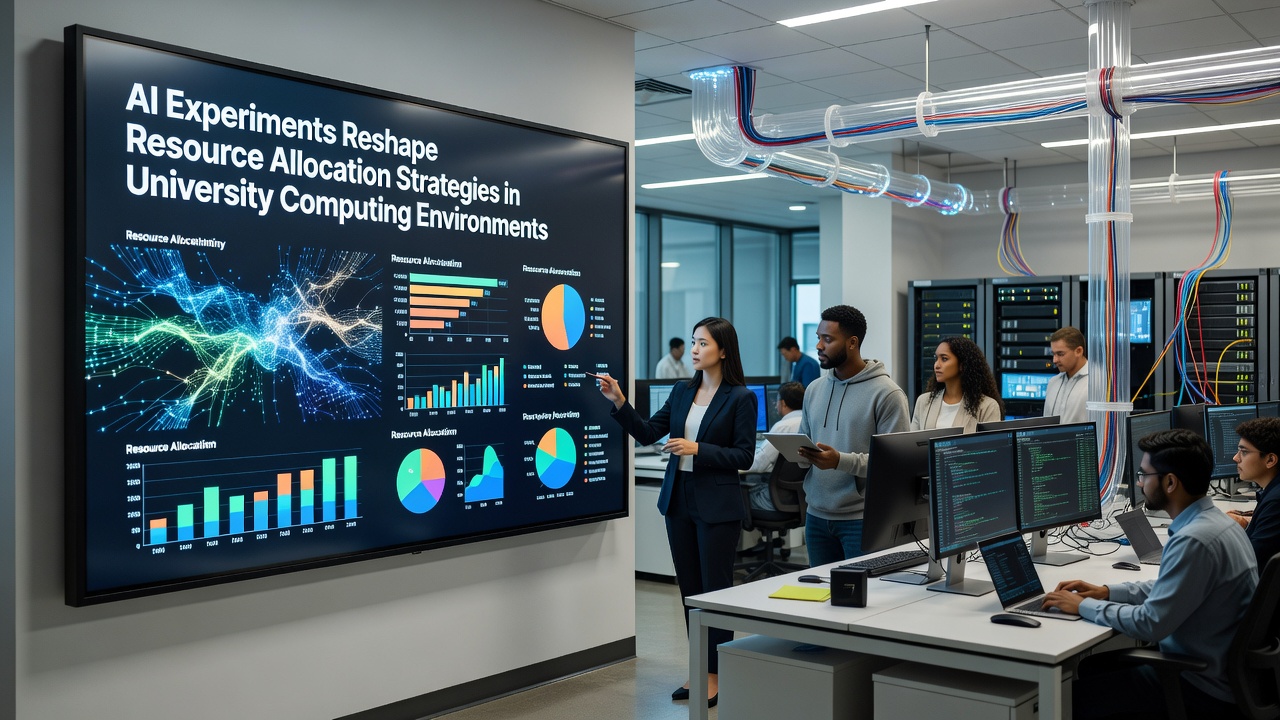
Universities have begun integrating artificial intelligence into their computing infrastructure management, and experiments conducted over the past two years show measurable shifts in how resources get distributed among research projects, teaching labs, and administrative systems. Data from multiple institutions indicates that machine learning models now predict demand patterns with greater accuracy than traditional scheduling methods, which allows administrators to reduce idle hardware time while maintaining performance for high-priority workloads.
Early Experiments and Implementation Patterns
Researchers at several large public universities started testing AI-based allocation tools in 2024, and by early 2025 many had moved from pilot programs to full deployment. These systems analyze historical usage logs, current job queues, and even weather-related power fluctuations to adjust virtual machine assignments in real time. One study published by the National Science Foundation documented a 23 percent drop in average wait times for batch processing jobs after the AI layer was added to existing cluster management software.
Institutions in North America and Europe adopted similar frameworks, yet each tailored the models to local constraints such as shared research grants or regional energy pricing. The approach relies on reinforcement learning agents that receive feedback from completed jobs and continuously refine their allocation policies, and this feedback loop has produced allocation decisions that adapt faster to sudden spikes in demand from fields like genomics or climate modeling.
Measured Outcomes in Resource Utilization
Figures released by participating universities reveal consistent improvements across several metrics. CPU utilization rates rose from an average of 64 percent to 81 percent within the first six months of deployment, while memory fragmentation decreased by roughly 17 percent. Energy consumption per completed job also fell in locations where the AI system could shift non-urgent workloads to off-peak hours.
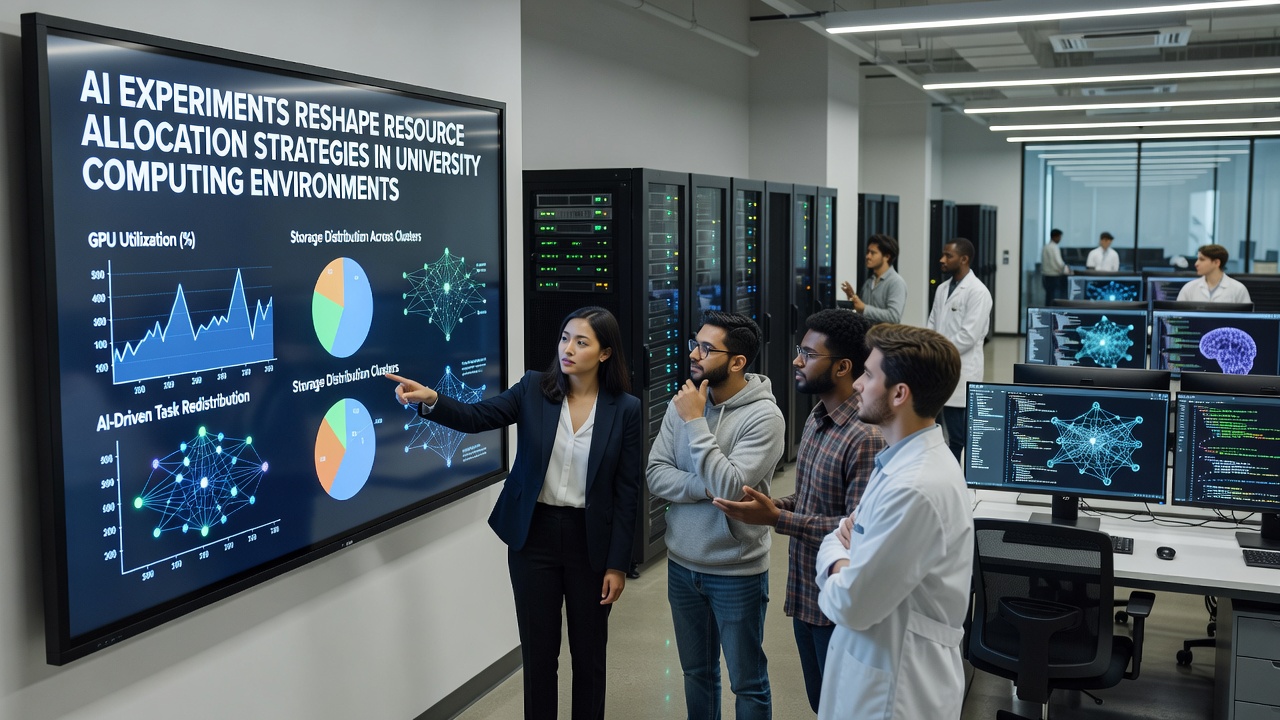
Observers note that these gains appear most pronounced in environments running mixed workloads, where teaching assignments and long-running simulations compete for the same hardware pool. The models learn to reserve capacity for recurring class schedules while carving out opportunistic windows for bursty research tasks, and this balance has reduced the need for emergency hardware purchases during peak semesters.
September 2026 Milestones and Ongoing Developments
Plans announced for September 2026 include a multi-institution benchmark study that will compare allocation efficiency across ten different AI frameworks currently in use. Organizers expect the results to guide future procurement decisions and possibly influence funding formulas used by federal agencies. In parallel, several Canadian research councils have begun requiring grant proposals to include AI-driven resource forecasts when applicants request access to shared national computing facilities.
Updates scheduled for that same month will also introduce new monitoring dashboards that display both predicted and actual resource consumption side by side, giving department heads clearer visibility into how their allocations evolve over time. These interfaces draw on open-source libraries that universities have customized to handle domain-specific constraints such as data residency rules for medical research.
Challenges Encountered During Rollout
Technical teams report that initial model training required extensive historical data cleaning, because legacy logs often contained incomplete job metadata or inconsistent user identifiers. Integration with existing authentication systems also demanded careful coordination to avoid disrupting ongoing experiments. Despite these hurdles, the majority of sites completed the transition within four to six months once standardized data pipelines were established.
Training programs for system administrators have expanded accordingly, and several universities now offer short courses that teach staff how to interpret AI recommendations rather than override them manually. This shift in operational culture has helped maintain trust in the automated decisions while still allowing human intervention when unusual circumstances arise.
Conclusion
Continued experimentation with AI allocation methods continues to produce new data on efficiency gains and operational trade-offs. As more institutions share their frameworks and results through collaborative repositories, the collective knowledge base grows, and this shared progress supports further refinement of the underlying models. The trajectory established through 2025 and into 2026 points toward broader adoption across higher education computing environments worldwide.