Elena Otto · 21 November 2026
Campus Networks Fuel Experiments With Machine Learning Tasks on Shared Educational Computing Setups
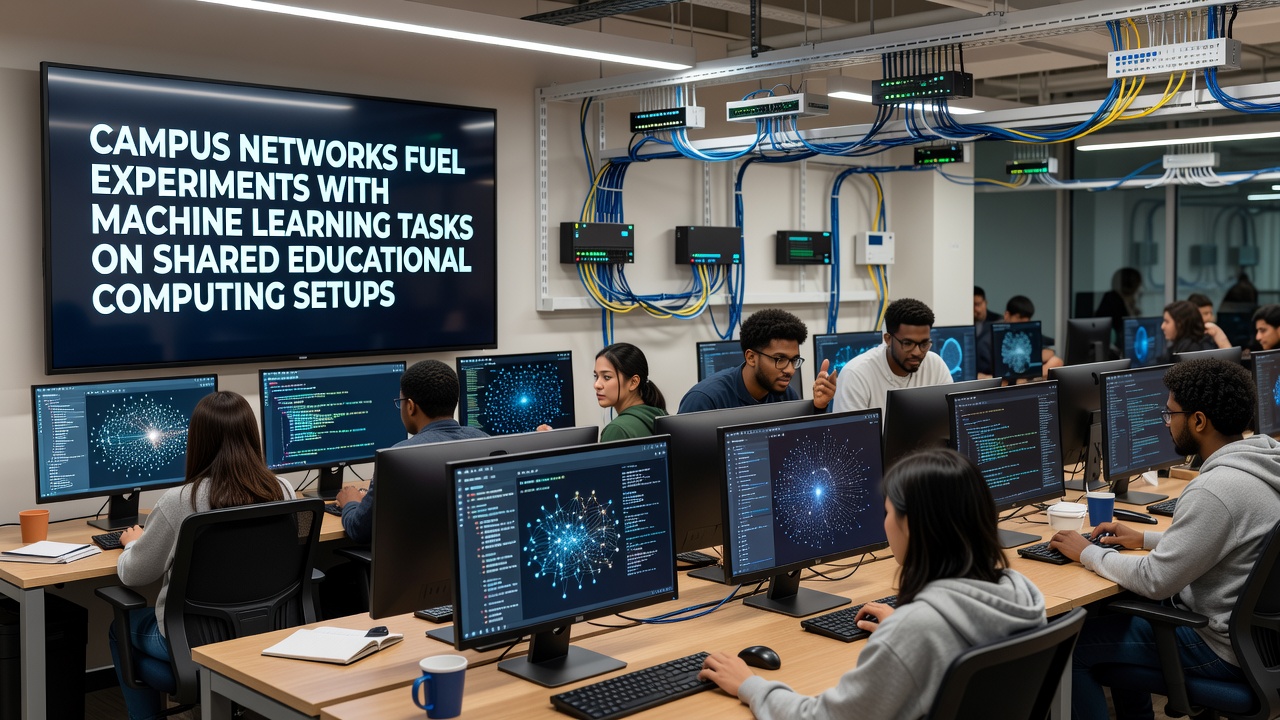
Campus networks now support a growing range of machine learning experiments that run on shared educational computing setups, and data from multiple academic consortia shows increased allocation of bandwidth and storage for these workloads since 2024. Researchers at institutions across North America and Europe route training jobs through high-speed interconnects that link departmental clusters to central data repositories, which reduces job wait times and allows simultaneous model iterations by student teams. Figures from the National Science Foundation indicate that academic cloud environments handled over 2.3 million ML-related compute hours in the 2025 academic year, a 47 percent rise from the prior period.
Shared Computing Infrastructure Expands Across Campuses
Universities maintain shared clusters equipped with GPUs and high-memory nodes that multiple departments access through campus networks rather than isolated lab servers, and this arrangement lets smaller programs run experiments without dedicated hardware purchases. Network upgrades completed in 2025 at several mid-sized institutions delivered 100 Gbps links between teaching labs and central facilities, which supports data movement for datasets exceeding 500 GB without significant bottlenecks. Observers note that these connections also integrate with regional research networks, allowing cross-institution collaborations where one campus supplies the compute while another contributes specialized datasets.
Students in computer science and engineering courses now submit ML training tasks that queue alongside faculty research jobs, and scheduling systems allocate resources based on priority tiers established by campus IT policies. This setup has led to documented cases where undergraduate teams completed image-classification projects in under four hours, whereas earlier isolated workstations required overnight runs. Data from the Canadian Research Knowledge Network reveals similar patterns in institutions that adopted unified network fabrics, with average job completion times dropping 32 percent after implementation.
Network Capabilities Drive Experiment Scale
Low-latency campus links enable distributed training approaches where models split across multiple nodes, and this technique appears in graduate-level courses that previously limited students to single-machine simulations. Bandwidth measurements collected during November 2026 peak periods showed sustained throughput above 80 Gbps during concurrent ML sessions at several large state universities, confirming that existing infrastructure handles the load when properly configured. Researchers route validation data and checkpoint files through dedicated VLANs that separate them from general campus traffic, which prevents interference during long-running jobs.
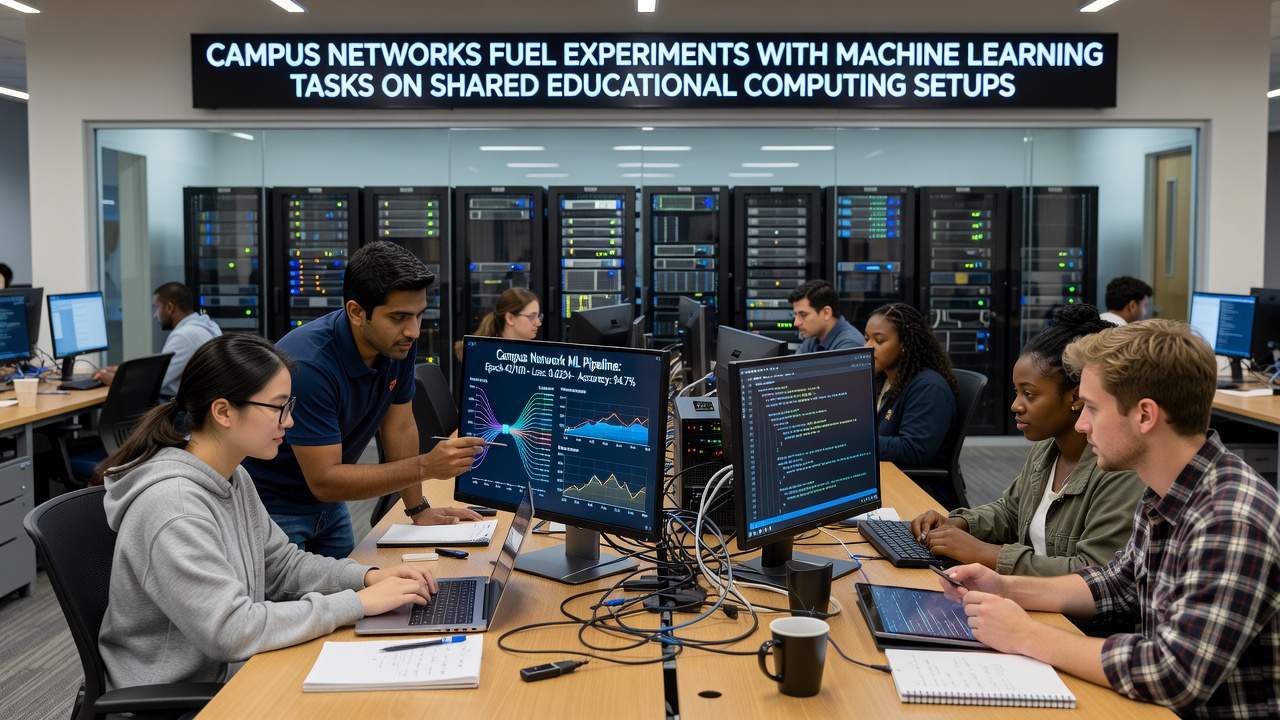
Storage systems attached to these networks use parallel file systems that allow simultaneous read access by dozens of training processes, and metrics reported by the European Grid Infrastructure show reduced I/O wait times when ML workloads share the same backend as traditional scientific simulations. Institutions that upgraded switches to support RDMA over Converged Ethernet report faster model synchronization steps, cutting epoch times by measurable margins in recurrent neural network projects. The approach also accommodates federated learning setups where edge devices on campus feed partial updates back to central servers without saturating the core network.
Resource Allocation Practices Support Broader Access
IT teams at participating universities apply fair-share algorithms that reserve portions of cluster capacity for coursework while leaving headroom for unscheduled research spikes, and logs from these systems indicate that ML tasks now account for roughly 28 percent of total educational compute usage. This balance emerged after policy adjustments in 2025 that incorporated network utilization forecasts into scheduling decisions. External reports from the Australian Research Data Commons highlight comparable frameworks that tie network monitoring directly to job queues, allowing automatic throttling when aggregate traffic approaches capacity limits.
Training datasets often originate from public repositories and move across campus networks during off-peak hours to minimize impact on instructional traffic, and automated transfer tools track completion rates that exceed 95 percent under current configurations. Faculty coordinators review usage dashboards that display both compute and network metrics, which informs decisions about when to expand interconnects or add caching layers. One documented pilot at a European technical university integrated network-aware schedulers that rerouted jobs to less congested paths, resulting in a 19 percent improvement in overall throughput during semester-end project deadlines.
Conclusion
Campus networks continue to underpin the expansion of machine learning experiments on shared educational computing setups by providing the connectivity and performance needed for multi-user environments. Data collected through 2026 demonstrates measurable gains in job throughput and accessibility when institutions align network capacity with cluster resources. Further integration with regional backbones and refined scheduling policies will likely sustain this trajectory as demand for ML training opportunities grows across academic programs.