Elena Otto · 12 September 2026
Student Cloud Project Trends Signal Evolution in Technical Training Methods
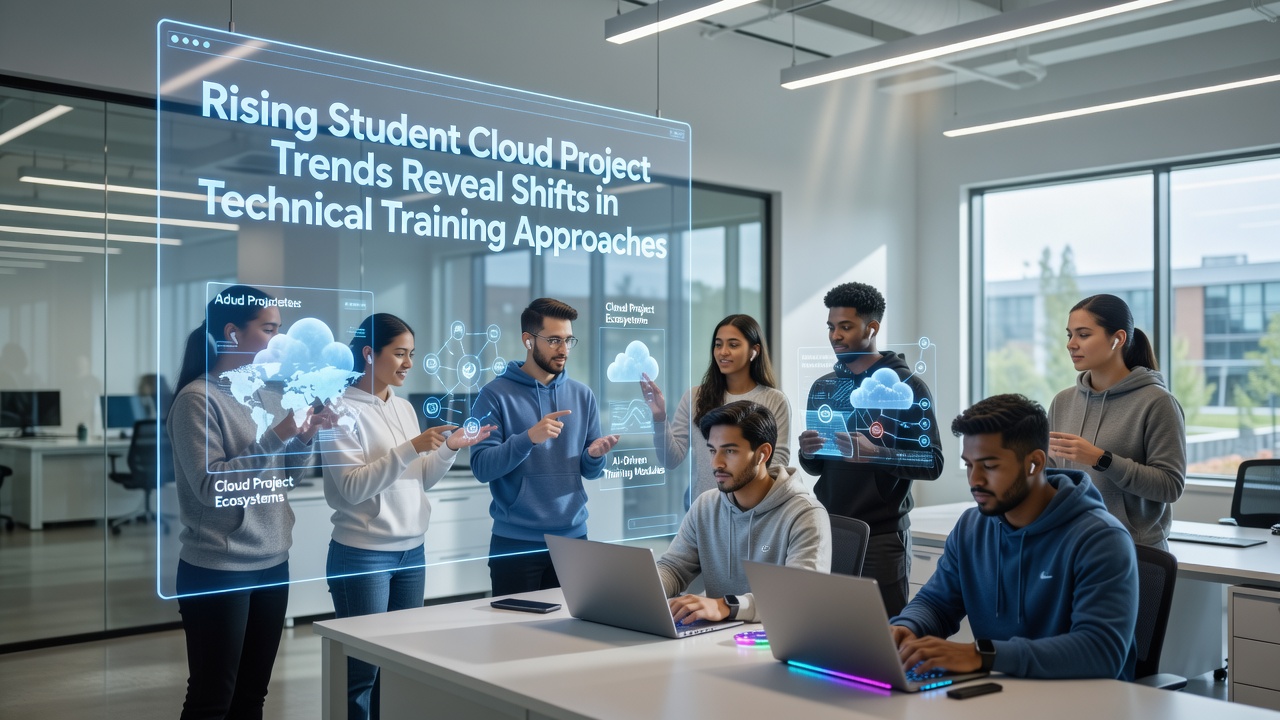
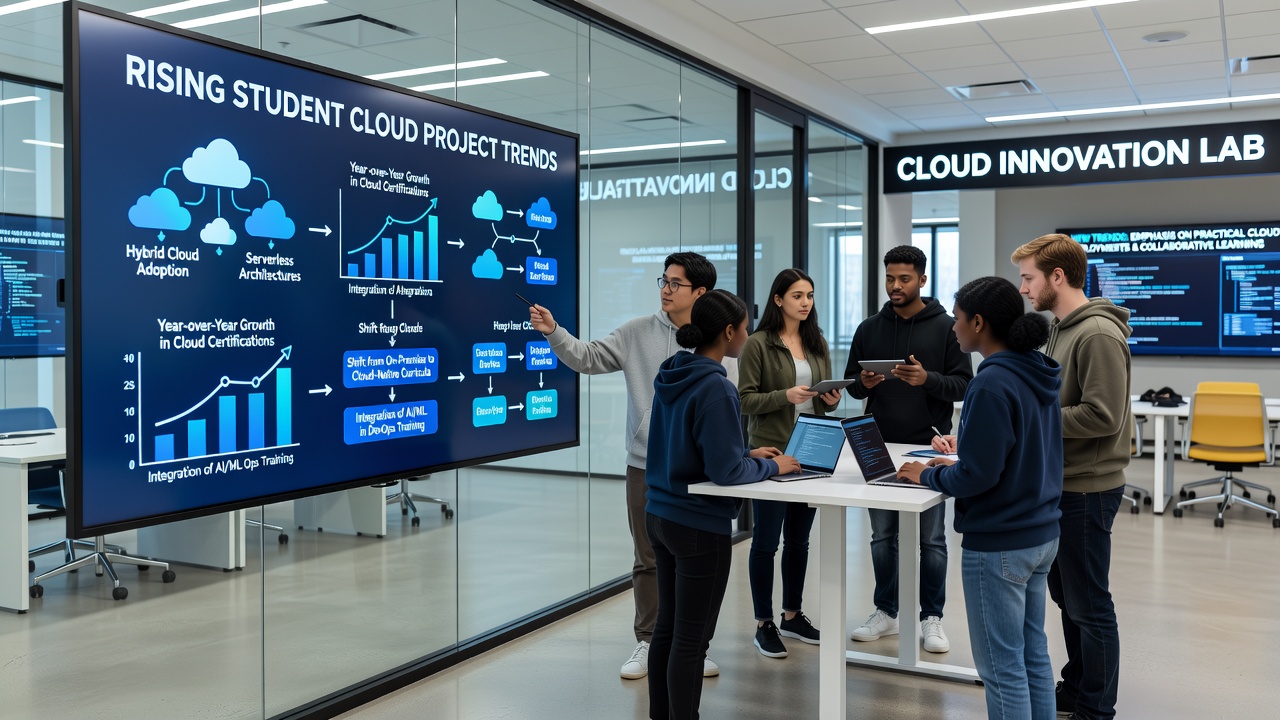
Student cloud project trends show increasing adoption of platforms such as AWS Educate and Microsoft Azure for Education, with participation rates climbing steadily through 2025 and into 2026. Data released in September 2026 from multiple academic surveys indicate that over 65 percent of computer science and engineering programs now incorporate cloud-hosted assignments as core components rather than optional add-ons, and this marks a departure from earlier reliance on on-premises servers for coursework.
Key Patterns in Project Development
Researchers at several institutions note that student teams now favor multi-cloud deployments and serverless architectures in their capstone work, while container orchestration tools like Kubernetes appear in project submissions at rates triple those recorded five years prior. These patterns emerge because cloud providers offer free tiers and educational credits that lower barriers for experimentation, and programs that integrate these resources report higher completion rates for complex assignments. Observers note that projects increasingly include real-time data pipelines and automated scaling demonstrations, features that require connectivity to live cloud environments instead of simulated ones.
One study conducted across North American universities found that collaborative repositories hosted on GitHub with integrated cloud CI/CD pipelines now feature in 78 percent of submitted work, whereas isolated desktop development has declined. This shift occurs alongside curriculum updates that embed cloud certification pathways directly into degree requirements, allowing students to accumulate industry-recognized credentials before graduation.
Adjustments in Instructional Approaches
Technical training programs have responded by replacing portions of traditional lecture-lab sequences with modular cloud workshops that emphasize hands-on provisioning and cost management. Instructors assign tasks that require students to monitor billing dashboards and optimize resource usage, skills that align with employer expectations documented in workforce reports from the U.S. Bureau of Labor Statistics. Faculty members who have adopted these methods observe improved student engagement metrics, particularly when projects span multiple weeks and incorporate peer code reviews conducted within shared cloud accounts.
Training materials now draw from live documentation and service updates issued by providers, which forces courses to refresh content each semester rather than reuse static textbooks. Programs in Australia and Canada have documented similar transitions, with national education agencies noting that cloud fluency appears among top competencies listed in graduate outcome surveys conducted in 2025.
Resource Allocation and Institutional Support
Universities allocate portions of IT budgets to subsidize student cloud usage and maintain dedicated support staff who assist with account provisioning and troubleshooting. According to figures from the National Science Foundation, grants supporting educational cloud infrastructure increased by 22 percent between 2023 and 2026, enabling smaller institutions to participate without bearing full costs. Partnerships with cloud vendors supply additional credits and training modules that integrate directly into learning management systems, reducing administrative overhead for departments.
Case examples show that departments which track project metrics through centralized dashboards achieve better visibility into resource consumption and can adjust allocations mid-semester. This data-driven oversight helps prevent budget overruns while still allowing exploratory work that sometimes leads to innovative student solutions presented at regional conferences.
Outcomes and Broader Implications
Graduates who complete cloud-intensive projects enter the workforce with documented experience in environments that mirror production settings, and hiring managers at technology firms report faster onboarding times for these candidates. Longitudinal tracking conducted by academic consortia indicates that alumni from programs emphasizing cloud projects maintain higher rates of employment in DevOps and cloud engineering roles within the first two years after graduation. Institutions continue to refine assessment rubrics to evaluate not only functional deliverables but also documentation of architectural decisions and cost analyses that accompany each submission.
Continued monitoring of enrollment and project submission data will determine whether these patterns stabilize or accelerate further in subsequent academic years.
Conclusion
Student cloud project trends continue to influence how technical training programs structure coursework, allocate resources, and measure competency. Evidence from multiple regions demonstrates measurable increases in platform usage and curriculum integration, while institutional adaptations focus on support structures that sustain these activities. Ongoing collection of participation and outcome data provides the basis for future adjustments in program design.